 By Nibav on September 10, 2025 at 6:58 am | Updated on May 5, 2026 at 4:32 am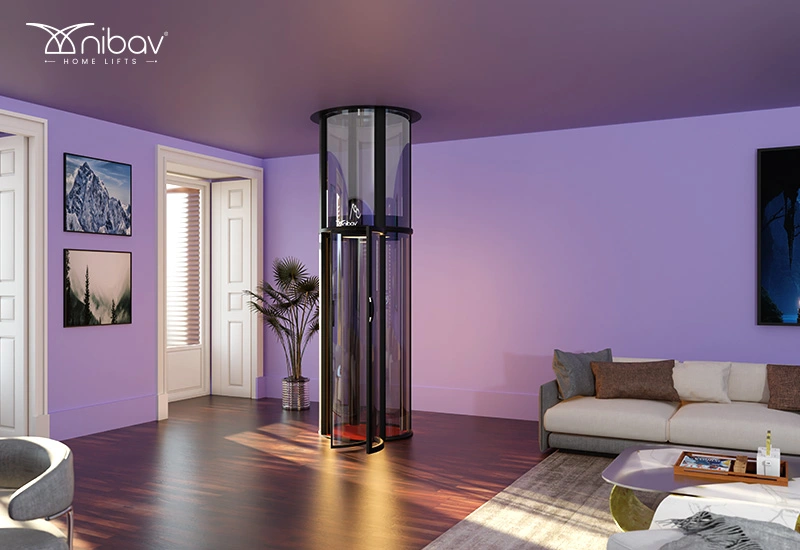
Residential elevators are designed for private home usage, while commercial elevators are more for public buildings and areas where an elevator is heavily used. Residential elevators are designed with personal comfort, safety, and style in mind, consumed with occupying a minimal compact footprint; commercial elevators are developed where durability, compliance, and load capacity are the highest priority. Choosing between a residential or commercial lift is based on your living space, usage, and lifestyle design.
Why the Difference Matters
No longer can we think about elevators as an added convenience for high-rise office towers or shopping centers. Now, in Thailand and in multiple countries around the world, there are many households adding home elevators to their residences for convenience, luxury, and modernization. However, the question arises, when considering the installation of an elevator, a residential lift or commercial elevator?
Both lifts at first glance look the same—they move people through spaces vertically. In fact, residential lifts and commercial elevators are actually different when it comes to design and purpose, as well as the safety plans needed in order to have an elevator installed in a building.
By understanding these differences, it is easier for you to select the correct lift for your space; whether your family villa is located in Bangkok, holiday home is in Phuket, or you have a mixed-use property.
Core Differences at a Glance
| Feature | Residential Elevators | Commercial Elevators |
| Purpose | Personal use in homes | Public or business use |
| Capacity | 2–5 people | 10–20+ people |
| Design | Stylish, compact, customisable | Functional, robust |
| Safety Standards | Residential-specific codes (simpler) | Strict commercial codes (ASME, EN, etc.) |
| Space Requirement | Low/no pit options available | Deep pit and overhead room required |
| Cost | Lower (personal scale) | Higher (industrial scale) |
| Maintenance | Periodic, user-friendly | Frequent, intensive |
Residential Elevators: Built for Homes
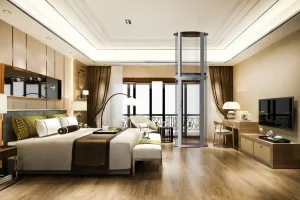
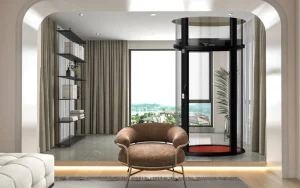
Residential elevators, or home elevators or residential lifts, are created for private use and focus on:
- Small Size: Designed to fit inside a villa, condo, or urban small home.
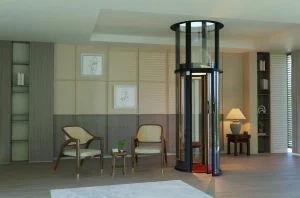
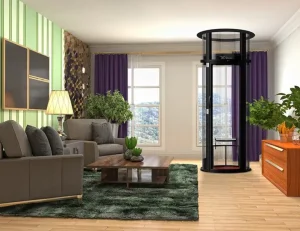
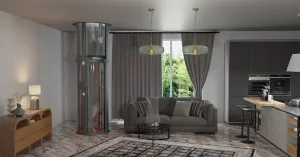
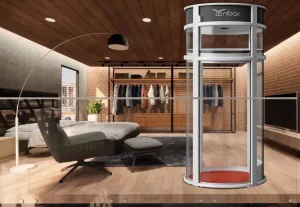
- Style: Usually made with glass walls and designer finishes to match the interiors.
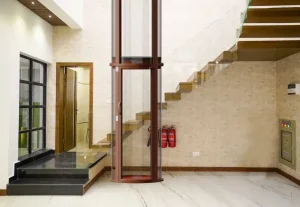
- Ease of Installation: Many lifts like Nibav’s need no pit, no machine room, and very minimal civil work.
- Family Safety: Child locks, emergency brakes, backup batteries, apps that monitor it.
For families in Thailand, residential lifts are more than just mobility solutions, they are lifestyle enhancements that offer added convenience for aging parents, safety for kids, and prestige for homeowners.
Commercial Elevators: Built for Public Use
Alternatively, commercial elevators are designed for heavy duty, high volume use. They’re found in malls, offices, hotels, and hospitals, and prioritize:
- Capacity & Durability – To carry large numbers of passengers and cargo.
- Compliance – Meets rigorous safety codes and inspections.
- Heavy Infrastructure – Requires pits, shafts, and overhead, which can delay construction by months.
- Limited Design Customization – Typically functional, with aesthetic considerations secondary to performance.
They are powerful and heavy-duty, but in a residential application, they are often overbuilt and impractical.
Safety Differences
Safety is a primary concern in both residential and commercial elevators, but they go about it differently:
- Residential Elevators: Safety tends to focus on family. Residential elevators offer features such as child safety locks, door interlocks, emergency brakes, smooth landing technology, and app monitoring. The aim is to prevent an accident in a low-traffic scenario.
- Commercial Elevators: Safety is about mass use. Commercial elevators have many redundancies, rigorous testing, fire-rated shafts, and accommodate large loads.
For home, the incremental complexity of a commercial-style system almost never provides incremental value; it simply costs more and displaces more space.
Cost Comparison
Residential lifts: Usually much less expensive, both in terms of the outlay and long-term maintenance. Residential lifts are designed for occasional use.
Commercial elevators: A large expense with ongoing expenses for servicing, inspections, and compliance.
In Thailand, you can spend considerably less having a home elevator like Nibav’s, compared to a commercial-grade system that can deliver the exact same thing.
Table of Contents
- Why the Difference Matters
- Core Differences at a Glance
- Residential Elevators: Built for Homes
- Commercial Elevators: Built for Public Use
- Safety Differences
- Cost Comparison
- Maintenance Requirements
- When to Choose Residential Elevators
- When to Choose Commercial Elevators
- Hybrid Situations
- The Thai Context: Why Residential Elevators Are Growing Fast
- What Makes Nibav Residential Elevators The Best Choice?
- Nibav Safety Features
- Certifications for Peace of Mind
- Lifestyle Benefits
- Conclusion: The Clear Choice for Homes
Maintenance Requirements
- Residential elevators: Maintenance is less intensive and less frequent than commercial elevator maintenance. Because of app monitoring, and predictive servicing, homeowners can be progressive and respond to issues before they occur.
- Commercial elevators: Require maintenance as scheduled inspections every few weeks or months because of their extensive use.
Conversely, for private home use, this difference represents more convenience and less total ownership costs.
When to Choose Residential Elevators
- You are constructing or improving a private residence in Thailand.
- You require access for elderly parents or family members.
- You want to increase property value with a luxury feature.
- You want a compact, stylish, and low-maintenance solution.
- You want safety features specifically for children and families.
When to Choose Commercial Elevators
- You are designing a commercial property, such as a mall, office, or hotel.
- You need to move dozens of people or goods on a daily basis.
- You need to comply with rigid public-building safety codes.
- You have adequate space for pits, machine rooms, and shafts.
Hybrid Situations
In certain scenarios, an owner may consider a commercial elevator – usually for mansions that are occupied by numerous residents, luxury estates doubling as venues for events, or multi-unit residential buildings. However, in 99% of situations regarding homes in Thailand, residential elevators are a better solution.
The Thai Context: Why Residential Elevators Are Growing Fast
Thailand’s real estate industry is evolving:
- Villas and townhouses in Bangkok: Owners are wanting luxury items without compromising on space.
- Holiday residences: Owners who have a holiday home in Hua Hin or Phuket value easy access through a lift so they can enjoy their multi-level properties.
- Multi-generational renters: By owning the family home with parents and grandparents, easy access is crucial.
Given these changes, residential elevators are significantly more appropriate than commercial elevators.
What Makes Nibav Residential Elevators The Best Choice?
At Nibav Thailand, we offer residential lifts that are specifically designed for these environments. Traditional systems not only require pits but also require significant effort to modify the property for the installation of the lift, while our no-pit home elevators can be easily and simply introduced both into new homes and into existing homes.
Nibav Safety Features
- Emergency brakes
- Battery backup
- Automatic door interlocks
- Child safety locks
- Real time tracking using our easy to use app.
Certifications for Peace of Mind
- We are TÜV NORD Certified for worldwide safety compliance.
- ISO certified manufacturing facilities
Lifestyle Benefits
- All our lifts use compact sustainable pneumatic technology.
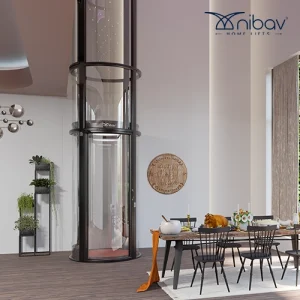
- We provide an elegant glass cabin to meet the modern conditions of the property.
- Our installation process requires little civil work and is hassle free.
Nibav not only sells lifts. We sell peace of mind, luxury and future proof living for Thai families.
Conclusion: The Clear Choice for Homes
When comparing residential elevators with commercial elevators, the choice becomes clear for homeowners. While commercial systems are powerful, they’re unnecessary for private living. Residential lifts—compact, stylish, safe, and affordable—are the right fit for families across Thailand.
By choosing Nibav, you’re not just installing a lift. You’re investing in accessibility, safety, and property value—while enjoying the convenience of the world’s most advanced home elevators.