 By Nibav on February 5, 2026 at 12:29 pm | Updated on February 6, 2026 at 4:52 am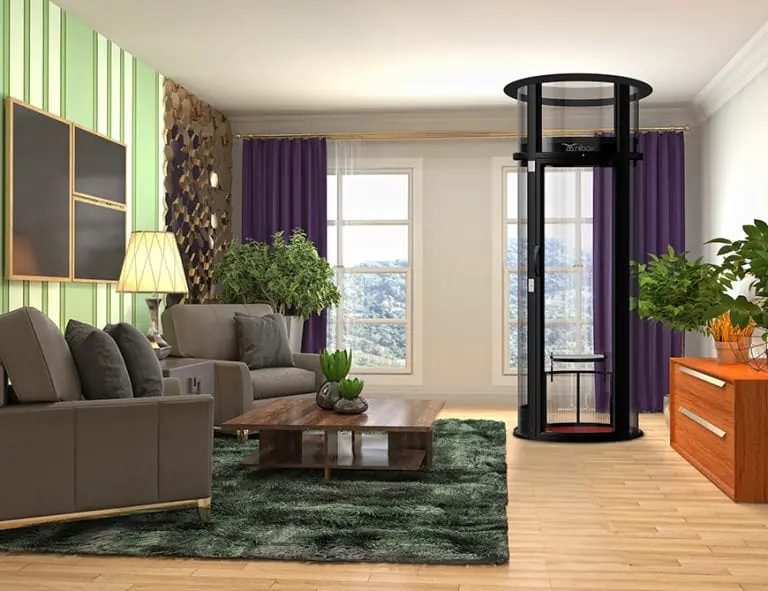
Overview – How Are Home Elevators Changing Villa Living in Thailand?
As the demand for spacious multi-storey villas in Thailand grows, many villa owners are adding home elevators and home lifts to improve comfort and accessibility. Modern elevator technology has enabled safer, quieter and much more energy-efficient residential elevators than ever before. Today, pneumatic home lifts, powered by air pressure rather than a traditional machine room, are one of the most popular options for villas, especially in urban areas.
This guide will assist you in selecting the most suitable lift for your villa, explain the various types of lifts available, and highlight the key technical features to evaluate before installation. It is intended for villa owners in Thailand who want a practical and stylish solution for vertical transport, including options from Nibav Thailand.
Why Should You Use Home Elevators in Villas?
Many villas in Thailand have multiple floors, meaning regular use of stairs. Over time, climbing stairs can be uncomfortable or unsafe for children, older family members or anyone with joint issues. Having a home lift makes daily movement easier, safer and far more comfortable. It can also reduce the physical stress associated with repeated stair climbing.
Installing a home lift not only increases convenience but also adds significant long-term value to a property. Buyers today look for homes that offer accessibility and comfort for all ages, making an elevator a strong value-adding lifestyle feature rather than just a functional element of a villa. Many Thai homeowners now consider Nibav home lifts as part of this lifestyle upgrade.
What Lifts Can be Installed in a Villa?
There are many different kinds of lifts that can be installed in a villa, some that will fit better into your villa than others. Each lift will have differences in the kinds of technology, the area that is required to install them, and the way they perform.
Table of Contents
- Overview – How Are Home Elevators Changing Villa Living in Thailand?
- Why Should You Use Home Elevators in Villas?
- What Lifts Can be Installed in a Villa?
- How Does Villa Layout Influence Lift Selection?
- How Much Weight Should Your Lift Hold?
- How Do Drive Systems Affect Energy Efficiency?
- What Safety Features Are Important in a Home Lift?
- What are the Design and Interior Options For Villa Lifts?
- What Are Typical Technical Specifications of Nibav Home Lifts?
- What is the Importance of Maintenance to Extend the Lifespan of Lifts?
- Frequently Asked Questions – Which Lift Is Best For Villa Use?
Hydraulic Lifts
Hydraulic lifts are powered by hydraulic power, so they use a hydraulic piston to raise and lower the lift’s cabin. These types of lifts typically give a very smooth, steady and stable ride and are very durable, but, because of the equipment necessary to operate and connect to the hydraulic piston, hydraulic lifts usually require more area to install than most other types of lifts. This may make them an appropriate choice for a villa, but not be the best choice based on most villas’ designs.
Traction Lifts
A traction lift utilizes a series of cables, pulleys, and counterweights to raise and lower the cabin using an electric motor as the power source. Traction lifts can be energy efficient and perform well in taller residences due to the weight of the travel cab. Some of the newer-designed traction lifts no longer require a dedicated machine room, so they save a significant amount of space that can be utilised for other things (like safety).
Pneumatic Lifts
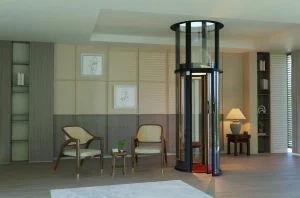
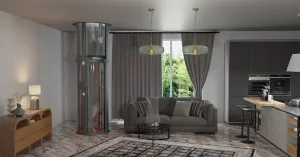
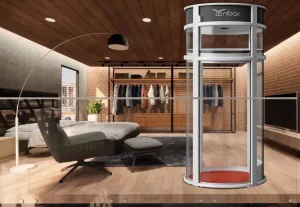
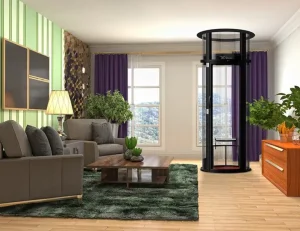
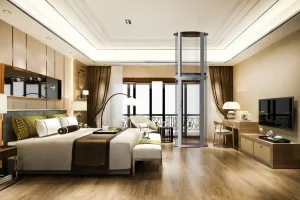
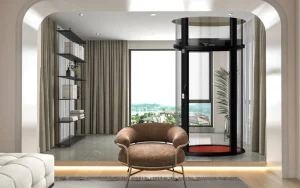
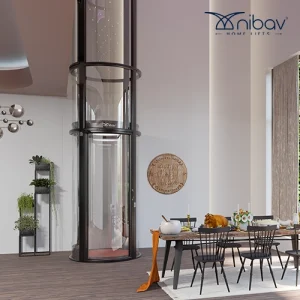
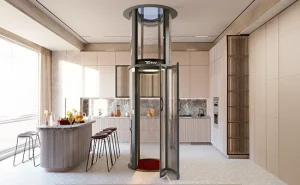
A pneumatic lift is an air-pressure-operated lift that uses air pressure in a sealed tube to lift and lower the cabin. They have the added benefit of not needing to have a machine room, pit, or any considerable structural modification made to your villa in order to be installed in a villa. Pneumatic lifts, like many of the designs offered by Nibav (Nibav is a very well-known pneumatic lift manufacturer), generally have a compact construction that is self-supporting and are an excellent choice for villas, where space is a big concern. Many of these pneumatic lifts (including Nibav’s) also have transparent panoramic cabins, adding another visual aspect and improving your home’s atmosphere.
How Does Villa Layout Influence Lift Selection?
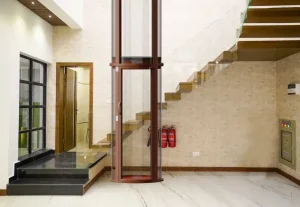
The internal design and layout of your villa influence which elevator type is most suitable. Traditional shaft-based elevators require more space, structural work and civil construction. In contrast, pneumatic lifts are often installed into tight spaces such as corners or near stair voids with minimal disruption.
Because pneumatic home elevators do not need a machine room or pit, they fit well into existing villas and renovation projects with limited space — a key reason they are frequently chosen by villa owners in Thailand.
How Much Weight Should Your Lift Hold?
The max weight of a lift is what determines how much weight it safely holds. Most single-family villas have sufficient weight capacities between 250 kg and 400 kg to use the lift daily. When you select the right weight capacity, it will work correctly for you for many years into the future.
The vertical travel distance and number of stops (usually between two and four floors for a villa) also influence lift performance and design. Systems must be engineered to fit the home’s architecture while meeting safety and operational requirements, which is taken into careful account in Nibav lift specifications.
How Do Drive Systems Affect Energy Efficiency?
The drive system directly affects energy consumption. Hydraulic elevators, while reliable, usually consume more energy due to the hydraulic pump mechanisms. Traction systems are more efficient than hydraulics, and air-driven pneumatic lifts often consume even less energy because they use air pressure rather than heavy motors, especially during descent. Many Nibav home elevator designs operate quietly and with lower energy use, reducing ongoing operating costs.
What Safety Features Are Important in a Home Lift?
Making sure that every residential lift is safe is a very important goal when you are designing and installing the lift. Modern lifts will have features like automatic door locks, emergency stop buttons, overload protection, backup descending systems for power failure, and a smooth starting/stopping system. This will enable the lift to move in a safe and stable manner while protecting the passenger every time they use it. Besides these features, Nibav lifts are manufactured to the utmost level of safety, with designs including multiple layers of safety. They have all the components and systems of their lifts tested and certified by TÜV, meeting the highest international safety standards.
What are the Design and Interior Options For Villa Lifts?
Your villa lift should blend in with the overall aesthetic of the villa and be unique to your home. Modern Villa lifts come with many design options to create the visual impact you want, such as
- Glass & panoramic lift cars provide a sophisticated and open space
- Metal decorative finishes & lighting allow you to create an upscale appearance
- A variety of colour schemes to use in conjunction with your existing home decor
Pneumatic lifts are a wonderful option for many modern villa designs; they enhance contemporary interiors without taking away from the space around them.
What Are Typical Technical Specifications of Nibav Home Lifts?
Nibav Thailand has various air-powered home lift designs to meet the residential market needs. Some of these models include the following characteristics:
| Model | Clear Space Required | Cabin Diameter | Capacity | Max Stops |
| Series III Standard | 1010 mm | 749 mm | 210 kg | G+3 (4) |
| Series III Max | 1430 mm | 1160 mm | 240 kg | G+3 (4) |
| Series IV Standard | 1000 mm | 830 mm | 210 kg | G+3 (4) |
| Series IV Max | 1430 mm | 1240 mm | 240 kg | G+3 (4) |
These designs all feature narrow, view-type, and air-lift functionality and require little to no physical work for installation.
Nibav home lifts are designed to be independent of the building for structural support, do not require a machine room or pit, and can be chosen as a small-space option — perfect for use in a villa.
What is the Importance of Maintenance to Extend the Lifespan of Lifts?
The home lift requires routine servicing (e.g., checking of all doors, sensors, and controls, and also all the mechanical components) in order to ensure that they will continue to operate effectively and reliably for years to come. Routine service helps to minimise breakdowns, and it also contributes to prolonging the time that the lift can be used for. Nibav offers scheduled maintenance plans to ensure ongoing reliability and safety of their home lifts.
Frequently Asked Questions – Which Lift Is Best For Villa Use?
Which lift would be the most suitable for my villa?
Pneumatic, hydraulic, and traction-style home lifts are all appropriate for the villa’s use; however, pneumatic lifts tend to be favorable for both modern design and limited space.
Will my home lift be safe for families?
Yes, a home lift designed and manufactured later than (year will show) will have many safety devices such as auto-lock doors, emergency stop buttons, and overload protection devices.
Will my home have to have a machine room for the pneumatic lift?
No, the pneumatic lift is designed without requiring a machine room, making a small installation area very easy to fit.
Are home lifts energy efficient?
Typically, all brands of home lifts are designed to be energy-efficient. Air-driven pneumatic systems often utilise significantly less energy during the descent phase than many other lift types, due to their reliance on air pressure to drop.
Will a home lift increase the resale value of my villa?
Yes, home lift installation would enhance the comfort of both use and access to your villa, thus leading to a higher property value and therefore making it more desirable to potential buyers.