 By Nibav on February 5, 2026 at 11:52 am | Updated on February 5, 2026 at 11:56 am
Synopsis
Home Elevators have become a requirement in many homes throughout today’s busy cities with small living areas. The most high-tech version of a home elevator presently is the use of a Machine Room Less (MRL) lift design. Unlike conventional elevators, which require a separate machine room, an MRL lift uses integrated technology inside the elevator shaft itself.
Because of this, MRL lifts are a compact design that works perfectly as a small lift or compact lift for a home, building site or other areas where there is limited space available while also providing great performance and safety and energy efficiency. This guide will provide an overview of MRL home elevators, how they function, their technical benefits and reasons to consider them as an alternative for families and homeowners.
At Nibav, these advanced MRL concepts are applied to modern home elevator designs to suit contemporary residential needs.
What Does MRL Mean in Home Elevators?
An MRL elevator does not have a machine room. A machine room was normally separate on a building site from the elevator and contained the motor for the elevator, the controller, and other machinery required to operate the elevator. In an MRL elevator, these features & components are located within the elevator shaft itself, so there is no machine room required.
Traditionally, elevators had to have an additional area above the highest floor to store their equipment, which created many challenges in the design, construction, maintenance, and operation of the building. MRL elevators have been designed so that by using compact technology, the equipment can be enclosed within the existing conditions of the home, thus eliminating those challenges.
Nibav home elevators adopt this principle to maximise space efficiency inside residential buildings.
How Does a Machine Room-Less Home Elevator Work?
Similar to other elevators, MRL (machine room-less) elevator operation will use the same principles; however, there are several different characteristics that enable MRL Elevators to operate without the use of separate machine rooms (the area in which elevator machinery is located).
Table of Contents
- Synopsis
- What Does MRL Mean in Home Elevators?
- How Does a Machine Room-Less Home Elevator Work?
- 1. Integrated Machine(s)
- 2. Traction and Counterbalance System
- 3. Advanced Control Electronics
- 4. Safety Systems and Backup Systems
- Key Technical Features of MRL Home Elevators
- Efficient Design
- Compact Lift Design
- Energy-Efficient Operating
- Quiet Operation
- Lower Installation Complexity
- Benefits of Choosing a Machine Room Less Home Elevator
- Optimised Usable Area
- Lower Construction Cost
- Reduced Operating Costs
- Modern Design
- Increased Resale Value
- Where Machine Room Less Home Elevators Are Best Used
- Installation and Maintenance Basics
- Machine Room Less Home Elevator vs Traditional Elevator
- FAQs About MRL Home Elevators
1. Integrated Machine(s)
The elevator components (drive motor, control unit, brake system, etc.) can all be installed inside the elevator shaft (in relation to the cab), either at the top of the elevator shaft or on the side of the cab. In addition, MRL Elevators will utilise compact gearless traction motors to save on space and provide continuous operational efficiency.
2. Traction and Counterbalance System
MRL Home Elevators typically utilise a Traction/Counterbalance System consisting of steel cable and counterbalance. The counterbalance generates a countervailing force on the weight of the elevator cab in order for the elevator to operate more fluidly without expending as much energy.
3. Advanced Control Electronics
The advanced elevator control system provides for speed regulation, accuracy of stopping, door operation and safety features. Most of the electronic controllers for these systems are also located in the elevator shaft area so that it is not necessary to have a separate machine room for these controllers to operate.
4. Safety Systems and Backup Systems
Although MRL elevators are not required to have machine rooms for the elevator to operate, these elevators do have built-in safety systems (such as door interlocks, overspeed governors, and emergency brakes) that are present on traditional elevators. These systems allow for a safe operation of the elevator. The systems also provide for compliance with both the building safety code and the state inspection standards for elevators.
Nibav integrates these safety systems into its home elevator models to support reliable daily use.
Key Technical Features of MRL Home Elevators
Here are the main technical aspects that make MRL home elevators ideal for modern residential use:
Efficient Design
Mechanical components are located entirely within the shaft, allowing for the best use of available floor space, which would normally have been used as the machine room for the elevator system. This is particularly helpful in homes that do not allow a lot of construction or alterations due to limited space.
Compact Lift Design
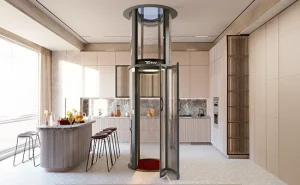
MRL elevators come in a compact lift version, which makes them the smallest elevator size available for the home since they will fit in much smaller hoistways. MRL elevators can be modified to work with a variety of home sizes without needing to change the home’s structure.
Energy-Efficient Operating
With equipment such as today’s highly efficient motors and controls reducing energy consumption, MRL elevators use up to 30%–40% less energy than traditional hydraulic or machine room elevators, resulting in less money spent on your utility bill and a lower carbon footprint.
Quiet Operation
The use of gearless traction motors combined with fewer mechanical components means that MRL elevators operate very smoothly and are usually considered to be very quiet during operation, thus providing increased comfort for residential living.
Lower Installation Complexity
Because there is not a machine room to build or allocate for an elevator machine, the construction part of the project is less complex. The time it takes to install an elevator is shorter, and therefore the effect of the overall renovation on the home will be less.
Benefits of Choosing a Machine Room Less Home Elevator
Choosing an MRL home elevator brings practical advantages for homeowners:
Optimised Usable Area
Without a machine room, the upper floors and roof can be used as part of the living space rather than for elevator equipment, providing the ideal conditions for urban dwellings, where every square meter is valuable.
Lower Construction Cost
The use of fewer elements and lower levels of site preparation will ultimately reduce construction costs. A home lift will also consume fewer materials and therefore require fewer man-hours to install.
Reduced Operating Costs
By using more efficient technology to create lower energy costs and less maintenance with less frequency, home lifts are an assistance for those using their home lift nearly every day.
Modern Design
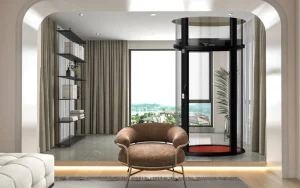
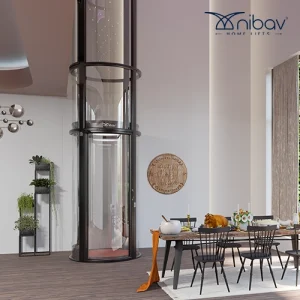
Home lifts also have modernly designed interiors and finish options that allow them to match the style of your home. These can be visually appealing (i.e., via the use of glass cabins) and add value to your home.
Increased Resale Value
Home lifts (especially those equipped with energy-efficient MRLs) usually increase the resale value of the home because they are attractive to buyers who enjoy convenience and ease of access.
Where Machine Room Less Home Elevators Are Best Used
MRL domestic lifts are appropriate for:
- Modern multi-level detached homes
- Duplex homes with space limitations
- Renovation projects not able to add new structures
- Homes occupied by elderly people / people with mobility difficulties
- Course of real estate requiring maximum use of limited residential land/spaces
- Multi-storey urban property development and/or stacked living designs
Nibav home elevators are designed to suit these residential environments effectively.
Installation and Maintenance Basics
Installation of MRL Elevators
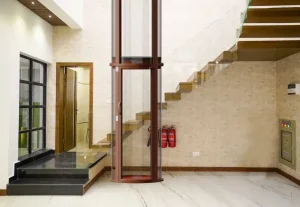
An MRL elevator has a hoistway or shaft, with the integrated motor and controls placed inside; likewise, the cabin is installed here. Almost all elements of the machine fit within the shaft, so there are no external rooms or additional levels required; however, depending on the building design, some structural reinforcement may be necessary.
Maintenance of MRL Elevators
Routine maintenance includes inspections of cables, brake systems, control systems, and doors. In general, the number of moving parts located outside of the shaft compared to traditional systems is much lower, making the maintenance of an MRL elevator much less complicated; that being said, it is important that the routine maintenance be performed by a trained technician, such as authorized service professionals from Nibav.
Machine Room Less Home Elevator vs Traditional Elevator
| Feature | MRL Elevator | Traditional Elevator |
| Machine Room Required | No | Yes |
| Space Efficiency | High | Lower |
| Installation Cost | Less | More |
| Energy Use | Lower | Higher |
| Maintenance | Simple | Regular |
This illustrates why MRL elevators are now the preferred choice for many modern homes looking for efficiency and comfort.
FAQs About MRL Home Elevators
1] What are the differences between MRL Home Elevators and Other Types of Home Elevators?
MRL elevators do not require a machine room; all of the essential components are contained within the lift shaft, thus saving room, simplifying installation and reducing cost.
2] Can I install an MRL Elevator in a Small Size Home?
Yes, MRL elevators are typically the most efficient way to install a compact or small lift in residential applications, as MRL elevators take up less structural space.
3] How Energy Efficient Are MRL Home Elevators?
Because of their power-efficient gearless motors and advanced electrical control systems, the MRL lifts are frequently an energy-saving option when compared to conventional systems. This translates to reduced running costs in the long run.
4] Is It Necessary To Construct A Machine Room For The Installation Of The Elevator?
No, the MRL home elevator completely negates the necessity for constructing a machine room.
5] When Should I Schedule Maintenance For My MRL Home Elevator?
An MRL Elevator should be serviced annually or biannually by a qualified service technician to keep the elevator safe and reliable. Proper scheduling of the maintenance for your MRL elevators will allow them to continue to operate properly.